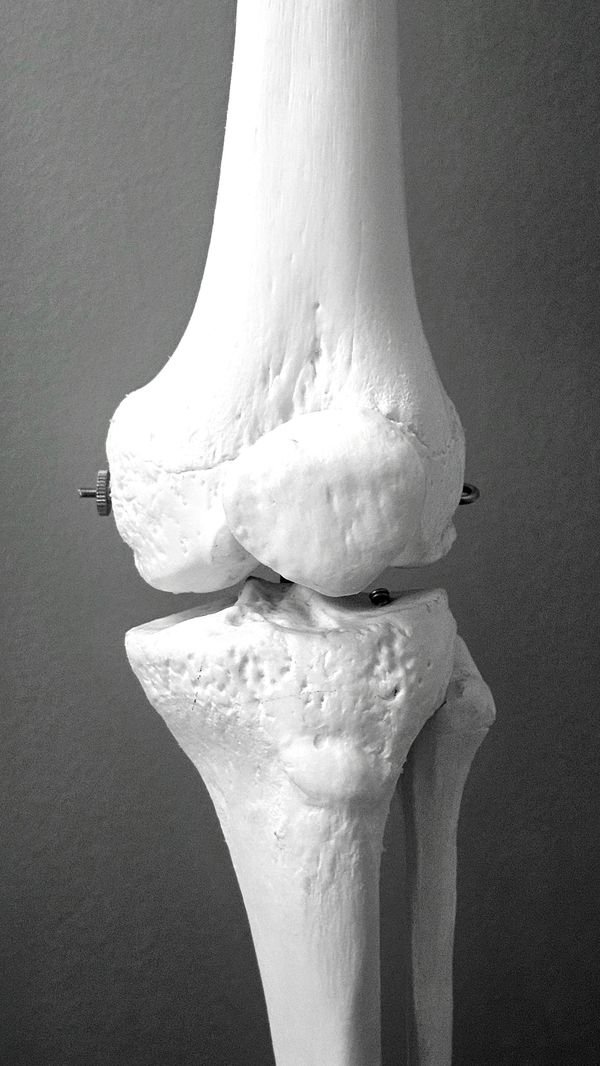
You didn't do anything wrong. You didn't fall. You didn't lift badly. You just woke up one morning and your knee felt stiff in a way it never quite did before. For most Indians in their late 30s and 40s, this is the beginning of a pattern. It gets attributed to 'age', managed with ibuprofen, and then quietly accepted as the new normal.
But here is what the biology actually says: joint deterioration is not a consequence of age. It is a consequence of three specific biological mechanisms that begin in your 30s and compound quietly through your 40s and 50s. Most people never address them directly, because most joint supplements never actually target them.
The ache you learn to live with at 38 is the joint damage you treat surgically at 58. The biology starts decades before the diagnosis.
A Note on Measurement: You Cannot Optimise What You Do Not Track
Before getting into the three mechanisms, it's worth saying something that most supplement brands never do: get your baseline. A simple blood panel including CRP (C-reactive protein) and uric acid, available at any diagnostic lab in India for under ₹800, tells you whether chronic low-grade inflammation is already active in your body.
The principle here is borrowed from the most serious longevity protocols: measurement precedes optimisation. If you start a joint supplement without knowing your baseline CRP, you have no way to know whether it's changing anything. If you test before and after 12 weeks, you will know. This is one thing the Indian supplement market almost never tells you. We are.
The Three Mechanisms That Drive Joint Deterioration
The 5-LOX Inflammatory Pathway
Healthy joints run on a tight inflammatory cycle: stimulus, response, resolution. The problem that develops with age is that the resolution step starts failing. The pathway driving this is 5-LOX (5-lipoxygenase) — an enzyme that produces leukotrienes, powerful inflammatory molecules that accumulate in joint tissue and cause persistent, low-level erosion. This is sometimes called 'inflammaging'.
NSAIDs — ibuprofen, diclofenac — work on the COX pathway, not 5-LOX. This is partly why they provide short-term relief without changing the underlying joint environment. They address the symptom of a mechanism they do not inhibit. Long-term NSAID use also carries gastrointestinal and cardiovascular risks that a 5-LOX-selective intervention does not.
Cartilage Breakdown via Immune Dysregulation
Cartilage is avascular — it has no blood supply and cannot repair itself the way muscle or skin does. The body's primary tool for protecting cartilage is the immune system, specifically a mechanism called oral tolerance that suppresses the autoimmune-like process that attacks cartilage tissue. As this immune regulation weakens with age, cartilage breakdown accelerates.
Glucosamine provides amino acid substrate for cartilage. It does not protect cartilage from the immune mechanism that is already breaking it down. Those are two different problems.
Synovial Fluid Viscosity Decline
Healthy joints are lubricated by synovial fluid, a viscous liquid whose primary structural component is hyaluronic acid (HA). HA gives synovial fluid its gel-like consistency — the property that allows joint surfaces to glide rather than grind. From your early 30s onward, HA concentration in synovial fluid declines. The fluid thins. Joint surfaces experience more direct friction, which accelerates both cartilage wear and inflammatory activity.
Signs this is the dominant mechanism for you: joints that click or grind during movement, stiffness that improves after warming up, and discomfort that is worse first thing in the morning than after thirty minutes of gentle activity.
Why the Standard Supplements Have Fallen Short
The Indian joint supplement market is dominated by glucosamine, chondroitin, and standard turmeric. These are not dangerous ingredients. But here is an honest account of what each one addresses — and what it does not:
None of the above address the 5-LOX pathway. None restore synovial fluid viscosity. The question isn't whether an ingredient is present. It's whether it's the right form, at the right dose, targeting the right mechanism.
What the Second Generation of Research Found
Over the past 15 years, the joint health research field moved beyond glucosamine and chondroitin. A mechanism-specific approach emerged — one that maps to the three root causes directly.
Boswellin® Super → 100mg
AKBBA (Acetyl-11-keto-beta-boswellic acid) is the active fraction of Boswellia serrata responsible for 5-LOX inhibition. Boswellin® Super is standardised to concentrate AKBBA — 100mg delivers the active content that standard Boswellia extract would require 300 to 500mg to match. Sontakke et al. (2007) and Sengupta et al. (2008) both found statistically significant reductions in joint pain and inflammatory markers at 8 weeks at this dose.
Carticol® UC-II → 40mg
Structurally intact (undenatured) type II collagen from chicken sternum activates regulatory T-cells in Peyer's patches of the small intestine. The mechanism is dose-sensitive: 40mg is the validated dose. Crowley et al. (2009) found UC-II at 40mg outperformed glucosamine 1,500mg + chondroitin 1,200mg on all three WOMAC measures across 180 days.
C3 Reduct® Tetrahydrocurcumin → 100mg
The primary active metabolite of curcumin — delivered directly rather than requiring conversion that standard turmeric cannot reliably complete. 10× more bioavailable than conventional curcumin. Reduces oxidative stress in joint tissue and potentiates the anti-inflammatory effect of Boswellia through a complementary, non-redundant pathway.
Sodium Hyaluronate → 80mg
Nagaoka et al. (2010) found significant improvement in knee discomfort at 80mg per day at 12 weeks. Tashiro et al. (2012) confirmed oral HA is absorbed and reaches synovial tissue. This is the same molecule used in clinical joint injections — in oral form. Pharmaceutical grade only.
An Honest Protocol: What to Do and When to Expect It
Boswellia begins inhibiting 5-LOX activity. Some people notice early reduction in morning stiffness. Do not evaluate anything yet.
Most Boswellia trial participants reported meaningful improvement by week 4. Hyaluronate effects begin building. This is the phase where most people incorrectly conclude it isn't working.
UC-II oral tolerance mechanism accumulates. Range of motion, flexibility, and sustained comfort improve as all four mechanisms act together.
The most clinically significant improvements in published trials occur at or after 12 weeks. Re-test CRP. Objective confirmation that the mechanism is working.
The most common reason joint protocols fail is stopping at week 3 when the biology is only in its first phase. Every mechanism that matters takes longer than that to establish.
The Indian Context: Why This Is More Urgent Than People Realise
Several features of the Indian lifestyle accelerate the three mechanisms described above faster than the global average:
- Desk work in urban India now averages 8 to 10 hours of sitting daily. Prolonged sitting reduces synovial fluid distribution and compresses knee cartilage. This is not equivalent to rest — it is an active accelerant of the third mechanism.
- A diet high in refined wheat, rice, and seed oils is significantly more inflammatory than one high in fibre, polyphenols, and omega-3 fatty acids. The 5-LOX mechanism is exacerbated by chronic dietary inflammation.
- Physical activity patterns in India tend to be binary: either very low or very high impact without progressive training. Both patterns are hard on cartilage.
- Early orthopaedic intervention is underutilised in India. Most people seek help when the damage is significant. The optimal window is 10 to 15 years before the first orthopaedic appointment.